The Millennium Institute for Care Research (MICARE) has been successfully renewed for a new five-year period, following a rigorous five-year evaluation process by the Millennium Science Initiative of the National Research and Development Agency (ANID). This milestone recognizes the scientific, educational, and social impact of the Institute, as well as its consolidation as a center of excellence in the generation of knowledge about care, support, and related public policies in Chile.
Since its creation, MICARE has stood out for its contributions to interdisciplinary research, the development of national and international collaborative networks, and its commitment to the training of advanced human capital. Its work has addressed priority issues such as informal and formal care for older adults, as well as people with intellectual and developmental disabilities, integrating sociocultural, technological, and public policy perspectives into a comprehensive rights-based approach.
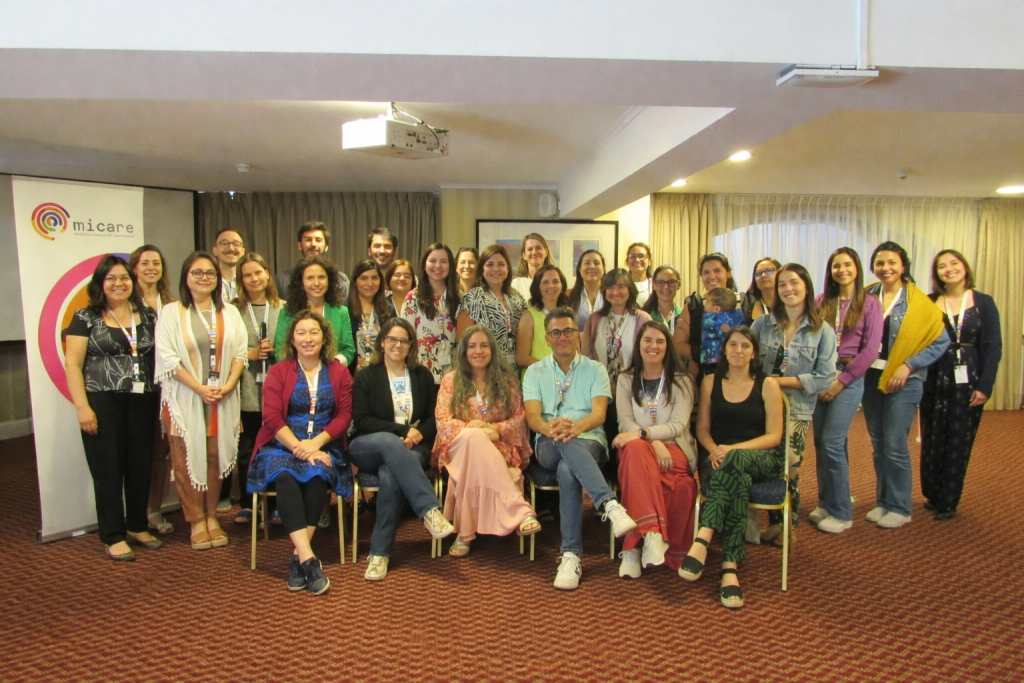
The renewal of the Institute is also a recognition of the sustained work of its researchers, students, and collaborators from different disciplines, who have contributed to positioning MICARE as a key player in the reflection and generation of relevant evidence for the country. This evaluation process, which included visits from international evaluators and a review of the achievements made during the first five years, culminated in the approval of a new five-year funding period, guaranteeing continuity and strategic projection for its lines of work.
A fundamental part of this process has been the MICARE Mentoring Program, which has promoted doctoral training, the integration of students into global scientific communities, and the consolidation of high-impact projects. Thanks to this academic and professional support, numerous young researchers have been able to strengthen their proposals, expand their networks, and position themselves in instances of international relevance.
“The renewal of the Institute reflects our community’s collective commitment to scientific excellence and the social relevance of research on care and support. The support we provide to our students and the mentoring we offer at MICARE have been key to strengthening capacities, generating quality evidence, and responding to the challenges facing the country in these areas,” said Claudia Miranda, director of MICARE.
Looking ahead, MICARE will promote new research projects, outreach initiatives, and advanced training strategies with the aim of continuing to contribute to evidence-based public policies, the inclusion of diverse populations, and the improvement of the well-being of older adults, people with disabilities, and those who provide care.